

Funding Shortfall: World Food Programme shuts down 150 clinics in Borno- Dr Sununu
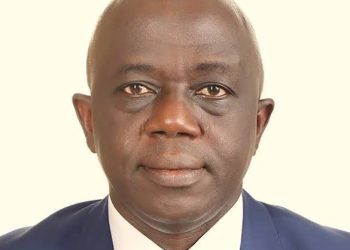
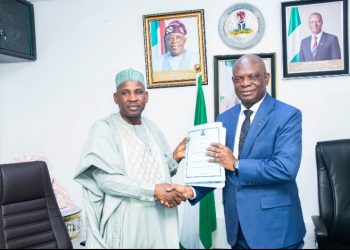
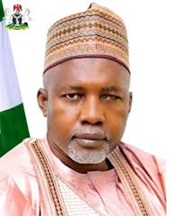
The Minister of State for Humanitarian Affairs and Poverty Reduction Dr Yusuf Tanko Sununu has said that the World Food Programme (WFP) has shut down almost 150 clinics in Borno state because of funding shortfalls from partner organization implementing United Nations activities.
The Minister stated this in an exclusive interview with STASPHERE MAGAZINE, Nigeria’s pioneer data-driven and Statistics advocacy publication recently published by S.J Communication Services Ltd in Abuja.
The Minister spoke in relation to funding shortfalls associated with implementing humanitarian and poverty reduction efforts of the Federal Government.
Dr Sununu noted that the funding coming to the United Nations has reduced stressing that partner organisations implementing UN activities have funding shortfalls.
“The World Food Programme(WFP) has shut down almost 150 clinics in Borno State alone. There are also 1.3 million Nigerians who were receiving emergency food transfers, which have been suspended now”.
Speaking further , the Minister said in Benue State , many World Food Programme activities have been affected because of funding shortages, adding that it has now become a global phenomenon.
He said everyone is shocked and surprised that the whole world almost allowed funding to come mainly from the United States of America.
According to him, “I was shocked when Trump said he had suspended funding to the United Nations and USAID, a lot of countries and organisations were affected”.
The Minister pointed out that global resilience is controlled by only a few powerful players adding that funding is a major issue everywhere.
He said because of funding shortages, President Bola Ahmed Tinubu has to come in with a special intervention to enable them carry out some of these humanitarian and poverty reduction programs and activities in the Country.
He revealed that funding also come from both local and international development partners which may not directly come to the ministry.
“If I say local partners, people may not understand. You see, if you carry out part of my work on my behalf, even if you don’t give me money you have funded me. A lot of people are going to villages, doing medical outreaches, removing cataracts, and carrying out other humanitarian activities. Some even write to the Ministry. For example, when I went for the UNGA, the Zoni Chibi Foundation in Delta had trained almost 5,000 people in one month, training them seriously.
“It is the Foundation’s own initiative and we need to acknowledge that. This is an example of funding that does not come directly to the ministry but still supports its activities”, he said.
He noted that “among international partners, there are many contributors. For instance, ECOWAS Nigeria is a funding member and currently has a fund of approximately USD$4 to USD$4.5 million, directed toward interventions in Sokoto, Benue, Borno, and Yobe States, focusing on food supply and other durable solutions”.
“We also have funding from the European Union and many other organisations. We are already reaching out to the Qatar Foundation. We also have partners who may not give us money but use our data. For instance, I must recognise and commend Chief Elumelu for trusting the National Social Register. Whenever he wants to intervene, he asks NASCO to access the Social Register. Based on the rankings, he identifies those in the lowest income category who need assistance and he reaches out to them. The money doesn’t come to us, but he relies on our data for targeting the beneficiaries. It is a form of collaboration”.