



Nobel Laureate Warning: The Danger of Borrowing in the Dark
By Adamu Lawal Toro
Nigeria is tightening its belt, but its borrowing hand is loosening.
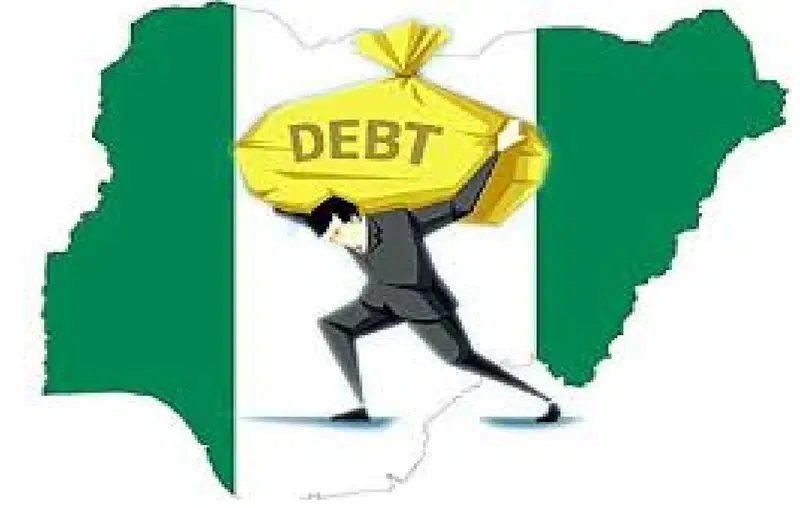
Fuel subsidies are gone. The naira has been battered. Prices are rising faster than wages. Across the country, households are adjusting to a harsher economic reality. Yet, even as ordinary Nigerians are told to endure sacrifice, the government is quietly piling up loans so far about $20 billion and trillions of naira under different guises many of them shrouded in limited public scrutiny.
That contradiction should worry us.
Because if there is one voice that has consistently warned about this exact path, it is Joseph Stiglitz. And his message is blunt: it is not just how much you borrow, it is how, why, and under what conditions you borrow that determines whether a country rises or sinks.
Borrowing Is Not the Problem. Blind Borrowing Is.
Let’s be clear: no serious economy develops without borrowing. Roads, power plants, rail lines these things require capital, often beyond what governments can raise domestically.
But there is a difference between strategic borrowing and opaque borrowing. Strategic borrowing is clear. Citizens know the purpose, the terms, and the expected returns. It is tied to projects that generate growth, jobs, and revenue.
Opaque borrowing is something else entirely. It lives in the shadows unclear terms, vague project linkages, and little public accountability. It is borrowing that asks citizens to trust without showing them the full picture.
Nigeria, increasingly, looks like it is drifting toward the second category.
We Have Seen This Movie Before
This is not new. Nigeria has walked this road before with painful consequences. From the era of the Structural Adjustment Program under Ibrahim Babangida to today’s reform wave under Bola Ahmed Tinubu, the script has a familiar rhythm:
Take loans.
Implement “reforms” aligned with global prescriptions.
Ask citizens to absorb the shock.Promise long-term gains.
But too often, those gains never quite arrive. Or they arrive for a narrow slice of society, leaving the majority worse off.
Stiglitz has spent years dissecting this pattern, particularly in countries dealing with the International Monetary Fund and the World Bank. His conclusion is uncomfortable: when loans come tied openly or quietly to rigid economic frameworks, they can do more harm than good.
The Hidden Cost of “Reform” Today, Nigeria is deep in a reform cycle: subsidy removal, exchange rate liberalization, fiscal tightening. On paper, these are meant to stabilize the economy.
But on the ground, the story is different.
Transport costs have surged. Food prices are punishing. Small businesses are gasping for air. For millions, “reform” feels less like a path to prosperity and more like a daily struggle for survival.
Now layer onto this reality a wave of borrowing that is not fully explained.That is where the real danger lies.
Because when loans and reforms move together without transparency the suspicion is inevitable: are we borrowing to solve problems, or borrowing to sustain a model that is already failing the majority?
Public Funds or Private Capital? A Missed Opportunity
There is another dimension Nigeria must confront. why must public borrowing carry the bulk of development financing when global best practice points elsewhere?
Across the world, governments increasingly rely on well-structured Public-Private Partnerships (PPPs) to fund infrastructure. These arrangements, when transparent and competitive, reduce pressure on public debt while bringing in efficiency, innovation, and discipline from the private sector.
Nigeria has seen both sides of this story.
The liberalization and transparent commercialization of the telecommunications sector stand as a clear success. Competition, regulatory clarity, and private capital transformed what was once a luxury into a near-universal service. Today, millions of Nigerians benefit daily from that model.
Contrast that with the opaque privatization of the power sector. Years later, it remains a burden, crippled by inefficiency, weak investment, and persistent public distrust. Instead of relieving the state, it has continued to demand public intervention and financial bailouts.
The lesson is simple: transparency and competition attract credible investors. Opacity invites failure.
Yet today, many large-scale projects still appear to be driven by a model that prioritizes public borrowing over private participation, often under conditions that are not fully disclosed.
Even more troubling is the growing perception that cronyism is shaping project selection and execution.
When contracts are not openly bid, when terms are not disclosed, and when the same familiar players dominate major deals, public confidence erodes. Worse, it raises the risk that projects are chosen not for their economic value, but for who benefits from them.
This is how debt becomes dangerous.
Because borrowed money, when filtered through opaque and politically connected systems, rarely delivers maximum value. It inflates costs, distorts priorities, and ultimately leaves citizens paying for projects that do not match their price tags.
Opaque loans are not just a technical issue. They are a national risk.
First, they weaken accountability. Debt is not abstract it is a claim on future national income. When the terms are unclear, citizens are effectively signing a blank cheque.
Second, they can hide bad deals: high interest rates, short repayment periods, policy strings attached. These details matter, and when they are not openly discussed, the country can walk into obligations that limit its future choices.
Third, they distort priorities. When borrowing is not tied to clearly defined, productive investments, funds can disappear into projects that do little to grow the economy.
Nigeria is already feeling the squeeze. A growing share of government revenue is going into debt servicing. That means less money for schools, hospitals, security, and infrastructure.
In simple terms: the more we borrow in the dark, the less room we have to breathe in the light.
If Stiglitz were advising Nigeria today, his position would not be complicated. He would not say “stop borrowing.” He would say: stop borrowing blindly.
His prescription would likely rest on four pillars.Radical transparency: every major loan should be made public terms, conditions, purpose. No exceptions.
Borrow for production, not consumption: loans should build assets that generate returns power, agriculture, industry not just plug budget holes. Reform on Nigerian terms: engage global institutions, but do not outsource national priorities to them.
And crucially, expand the role of credible private capital through transparent PPPs, ensuring that the burden of development does not fall disproportionately on public debt.
Beyond the economics, there is a deeper issue: trust.
Reforms are painful. Nigerians understand that. But pain without clarity breeds anger. Sacrifice without transparency breeds suspicion.
When citizens are told to endure hardship, they expect openness in return. They expect to know where the country is heading and what burdens are being placed on their shoulders. Opaque borrowing breaks that social contract.
Nigeria is not doomed. But it is at a crossroads. The decisions being made now on borrowing, on reform, on transparency, on whether to embrace credible private partnerships or sustain opaque state-led financing will echo for years.
Debt can build a nation. It can also bind it. Joseph Stiglitz has already issued the warning. The question is whether Nigeria is listening. Because in the end, the greatest risk is not that Nigeria is borrowing.
It is that Nigeria may be borrowing without fully seeing.
And nations that borrow in the dark rarely control how the story ends.
Toro, a public affairs analyst writes from Zone 7, Abuja.