



Aso Rock’s Selective Silence: Why the Presidency’s Alibi for Gbajabiamila Fails the Integrity Test
By Godwin Anyebe
I am deeply unsettled and profoundly disappointed by the recent press release issued by the State House, signed by Bayo Onanuga, regarding the criminal prosecution of Prince Adeniyi Adeyemi Matthew. While the Presidency appears eager to wash its hands of this messy affair by labeling Matthew a “serial con artist,” the official statement does something incredibly dangerous: it completely avoids the highly damaging, institutional questions raised by the accused, reducing a structural integrity crisis into a simple case of individual fraud.
As a citizen who demands transparency, I find it unacceptable that the government expects us to swallow this narrative hook, line, and sinker while leaving glaring loopholes completely unaddressed.
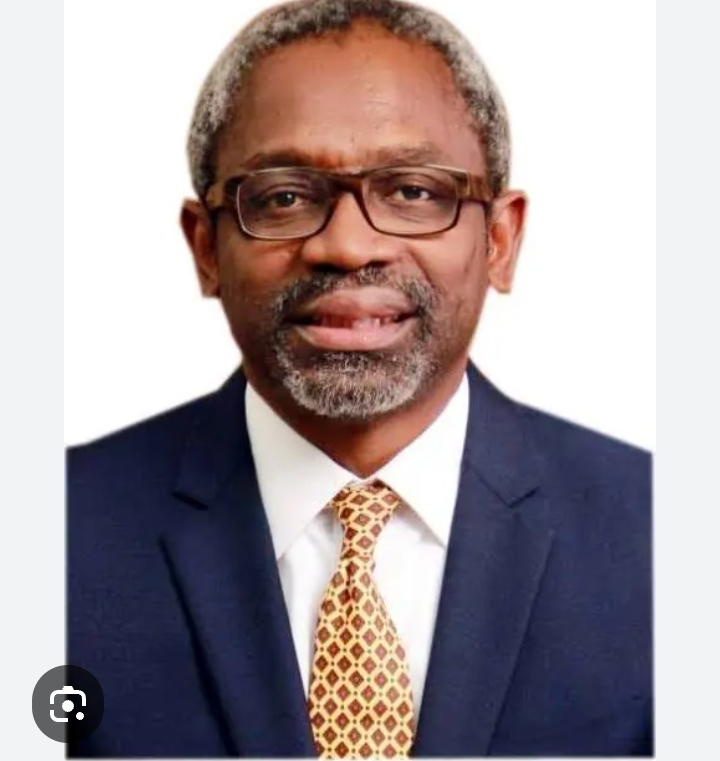
The central problem with the State House’s statement is that it utterly fails to confront the specific, heavyweight claims that Adeniyi Matthew has leveled against the Chief of Staff to the President, Femi Gbajabiamila. Matthew publicly asserted that his purported appointment as Director-General of the Presidential Foreign Intervention Promotion Council (PFIPC) was not a solo act of forgery, but rather a cash-for-appointment transaction.
Specifically, Matthew claimed he paid a staggering ₦400 million through proxies to secure the position, with an outstanding balance of ₦200 million. More damningly, he alleged that the fallout between himself and the Chief of Staff occurred because Gbajabiamila demanded a 48 percent cut of a ₦27.4 billion take-off grant supposedly tied to the agency.
Instead of addressing how a “fictitious” agency could allegedly secure a ₦27.4 billion allocation in the national budget framework or successfully open a verified account with the Central Bank of Nigeria (CBN) through the Office of the Accountant-General, the Presidency simply hid behind a blanket denial. If the agency was a complete ghost, how did it infiltrate the highest levels of Nigeria’s fiscal architecture?
Furthermore, we cannot view these allegations in a vacuum, because this is far from the first time the Chief of Staff has been entangled in deep ethical and financial controversies both at home and abroad. We must remember that in 2007, the Supreme Court of the State of Georgia in the United States suspended Gbajabiamila from practicing law for 36 months after he admitted to violating professional conduct rules by pocketing a $25,000 personal injury settlement belonging to his client, closing his practice, and fleeing back to Nigeria.
More recently, reports surfaced alleging that Gbajabiamila and a high-ranking political cabal attempted to intercept and corner a massive $30 billion loot and 66 choice properties recovered from former presidential aide Tunde Sabiu Yusuf by Special Investigator Jim Obazee.
When a public official carries a trail of ethical baggage stretching from the United States to the inner chambers of Aso Rock, any new allegation of bribery and budget manipulation must be treated with the utmost seriousness. The State House cannot act as a judge and jury in its own case, using the sub judice rule to shield the Chief of Staff from public scrutiny.
I must ask: Is it right for Rt. Hon. Femi Gbajabiamila to remain in office, wielding immense executive influence, while these severe criminal allegations hang over his head? The honorable path dictates that he must step aside immediately to allow an independent, unfettered judicial panel to investigate these claims. Anything less compromises the entire credibility of the Presidency and makes a mockery of the administration’s anti-corruption posture.
Godwin Anyebe is a Journalist and a Rights Activist.