




PENGASSAN Says regulatory Certainty Critical for Investors Confidence in Nigeria’s oil and gas Sector
The Petroleum and Natural Gas Senior Staff Association of Nigeria (PENGASSAN) has called for regulatory certainty to attract investments into Nigeria’s oil and gas industry.
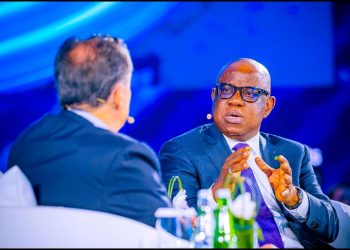
The President of the association, Mr. Festus Osifo, made the call Wednesday at the fifth edition of the PENGASSAN Energy and Labour Summit (PEALS) 2026 holding in Abuja.
The theme of the summit is “Strengthening Regulatory Frameworks as a Catalyst for Stability and Growth in Nigeria’s Oil and Gas Industry”.
He said oil and gas was capital-intensive, with investments often requiring decades before returns could be realised, making regulatory certainty critical to investors’ confidence.
“Investors need clear rules. Operators need predictability. Workers need protection. Host communities need confidence, while governments need sustainable revenues,” he said.
Osifo said Nigeria’s regulatory environment must be predictable, transparent, efficient and fair to enable investors to make long-term decisions and support sustainable industry development.
Comrade Osifo expressed concern over changes to the regulatory framework after the Petroleum Industry Act (PIA) 2021, saying such alterations could create uncertainty for operators and investors.
“These do not instil confidence or promote stability; instead, they amplify uncertainty and disruption,” Osifo said.
According to him, the challenge is not necessarily the number of regulatory institutions, but the efficiency and clarity of their mandates and responsibilities.
He said overlapping mandates could expose operators to repetitive approvals, multiple inspections and conflicting directives, thereby increasing delays and operational costs.
“Regulation must provide oversight without creating avoidable delays. What we require is not weak regulations, but smarter regulations,” he said.
Osifo urged regulators to deploy technology and simplify approval processes while maintaining effective oversight of operators and projects.
He said Nigeria could not afford regulatory processes that unnecessarily delayed development plans, final investment decisions and projects capable of increasing oil and gas production.
“Capital is mobile, and investors will naturally gravitate toward jurisdictions where there are clarity and efficiency. Our processes must therefore be clear and our systems efficient,” he said.
The PENGASSAN President urged stakeholders to strike a balance between attracting investments and maintaining strong regulatory, safety and environmental standards.
He said regulation should not become an obstacle to investment, just as investment should not be used as an excuse for weakening standards.
He urged the Federal Government to promote domestic refining, gas processing and infrastructure development for liquefied petroleum gas, compressed natural gas and liquefied natural gas.
He said Nigeria’s gas resources could support power generation, petrochemicals, fertiliser production, transportation and industrialisation, if adequate investments were made.
“Resources beneath the ground create little value until investments are made to make them usable,” he said.
He acknowledged improvements in oil production and renewed investment activities, but urged stakeholders to move beyond recovering lost production.
According to him, Nigeria must unlock new reserves, attract fresh capital and sustainably increase crude oil and gas production.
Osifo called for stronger collaboration among government, regulators, operators, investors and labour to build a stable and prosperous oil and gas industry.
“Without investment, there will be no project. Without project, there will be no sustainable jobs. Without production, there will be no revenue,” he said.
He said PENGASSAN remained committed to an industry where capital and labour could prosper through predictable regulation, responsible investment and sustainable production.
Also at the occasion, the Secretary to the Government of the Federation, SGF, Senator George Akume, said Nigeria must maximise its vast gas resources as a source of energy, industrial feedstock and economic growth.
Prof. Olatunde Bolade, who represented Akume at the event said the country’s more than 215tcf of proven gas reserves offered an opportunity to diversify the economy and accelerate industrial development.
He said the Federal Government was seeking to deploy gas for power generation, manufacturing, fertiliser and petrochemical production, transportation and other productive activities.
“Gas can provide the reliable energy for manufacturers. It can support fertilizer and petrochemical industries. It can provide feedstock for industrial development and create opportunities for investment across the value chain,” he said.
The SGF said the administration had accelerated the Decade of Gas programme under the Renewed Hope Agenda as part of efforts to increase domestic gas utilisation.
He said the ultimate objective was to ensure that Nigeria did not merely extract hydrocarbons but converted its petroleum resources into industrialization, job creation, technology transfer and broader economic growth.