






FG Inaugurates Panel To Review Public Inputs On Tax Reforms
By Ewache Ajefu
The Federal Government has set up a panel to review not less than 134 submissions received from Nigerians across the six geopolitical zones on the implementation of the Nigeria’s tax and fiscal policy reforms.
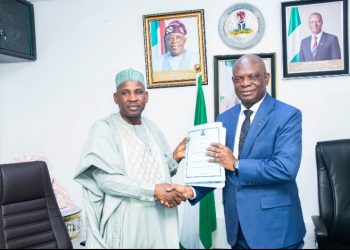
Minister of Finance and Coordinating Minister of the Economy, Mr Taiwo Oyedele, who inaugurated the committee said the submissions will dwell largely on the need to clarify and simplify provisions of the new tax laws, particularly Value Added Tax (VAT) thresholds, withholding tax and capital gains treatment.
The submissions included calls for stronger measures to address multiple taxation, improve coordination among revenue authorities and reduce compliance burdens on taxpayers.
Oyedele stated this Thursday in Abuja at the inauguration of the sub-technical committee on fiscal policy and tax reforms.
The committee, comprising officials from the Ministry of Finance, Ministry of Justice, Nigeria Revenue Service, Joint Revenue Board, Nigeria Customs Service, Small and Medium Enterprises Development Agency of Nigeria (SMEDAN), organised private sector and professional bodies, has six weeks to submit its report to the minister.
The Minister said issues raised in the submissions, included but not limited to stronger digitalisation and data-sharing across government agencies to ensure taxpayers are not repeatedly asked to provide information already in government databases.
He noted that stakeholders sought stronger taxpayer rights, faster tax refunds and safeguards for small businesses, as well as measures to enhance investment and competitiveness in sectors including mining, renewable energy, healthcare and capital markets.
According to the minister, the diversity of the submissions underscores the importance of reviewing the reforms based on practical experiences since their implementation.
Oyedele charged members of the committee to be “thorough, rigorous and objective,” listen widely, challenge assumptions and follow the evidence, while putting the national interest first.
On the proposed Finance Bill 2027, he urged the committee to build on the existing reforms rather than treat the legislation as an entirely new exercise.
“The Finance Bill 2027 should not be seen as just another annual legislative exercise. Our task is not to rewrite the 2025 reforms, but to preserve their fundamental principles while learning from implementation and responding to new economic realities,” he said.
He said the committee must identify areas where implementation had exposed ambiguities or unintended consequences, simplify compliance requirements and explore measures capable of improving investment and competitiveness.
Specifically, Oyedele directed the committee to review the Deduction of Tax at Source Regulations 2024 against the new tax laws and prepare revised Withholding Tax Regulations.
Oyedele told members that withholding tax was designed as an advance-payment and compliance mechanism, rather than an additional cost to businesses or a tax on working capital.
“You will also review the Companies Income Tax (Significant Economic Presence) Order 2020 and develop an updated framework aligned with our new laws and international best practice,” he added.
Oyedele said Nigeria needed to protect its legitimate taxing rights while maintaining an environment capable of attracting technology and cross-border investment.
“In a digital, globalised economy, Nigeria must protect its legitimate taxing rights while remaining competitive for technology and cross-border investment. We should neither surrender our tax base nor isolate ourselves from the global economy. The right answer lies in balance,” he said.
President Bola Ahmed Tinubu launched the fiscal and economic policy reform process in 2023, culminating in the enactment of the Nigeria Tax Act 2025, Nigeria Tax Administration Act 2025, Nigeria Revenue Service (Establishment) Act 2025 and Joint Revenue Board (Establishment) Act 2025.