






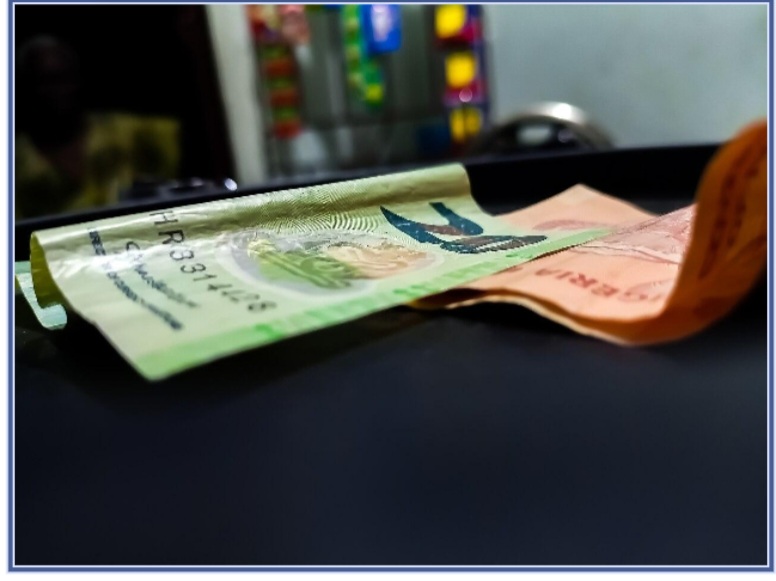
Despite the exponential spread of cashless systems around the world, such as mobile wallets and digital payments, recent liquidity crises in Africa have exposed the still critical role that physical currency plays in the everyday lives of people across different economies.
Earlier this year, at the 58th Session of the Economic Commission for Africa Conference of African Ministers of Finance, Planning and Economic Development, a number of African institutions, policymakers, development partners and private sector actors called for a more structured, innovative approach to the continent’s digital transformation. Many believe that unlocking the potential of digital financial systems will be key if any form of universal financial inclusion is to be achieved.
Indeed, this conversation around payment methods in Africa has focused on digitalisation. Mobile money platforms have expanded rapidly, financial inclusion has improved, and governments have sought to reduce reliance on physical currency. According to the Global Finance Index 2025, the share of adults in Sub-Saharan Africa with either a bank or mobile money account grew from 34% to 58% between 2014 and 2024, with the share of adults using digital payments almost doubling.
In spite of this data, recent events in Guinea and Nigeria, have demonstrated a simple reality: cash remains indispensable to the functioning of many economies. When cash is readily available, it often goes unnoticed. When it becomes scarce, however, its importance becomes immediately apparent. Households struggle to make purchases, businesses face difficulties paying suppliers, and economic activity can slow across entire sectors.
The liquidity crisis currently affecting Guinea illustrates this dynamic. While digital payment systems continue to expand across the continent, the country’s experience shows that physical currency remains a critical component of economic resilience.
A problem of circulation, not scarcity
According to the Guinean government, the principal reason for the ongoing economic crisis is cash hoarding by an anxious population. Guinea has spent much of the past year grappling with a persistent shortage of cash in circulation. Long queues outside banks and difficulties withdrawing money have become familiar experiences for many citizens despite repeated interventions by the authorities. To tackle circulation issues, the government injected 908 billion Guinean francs ($103.4 million) into banks in the first quarter of 2026. The Central Bank of the Republic of Guinea (BCRG) had previously argued that the issue was due to a large number of banknotes circulating outside the banking system and never making it back to the central bank, meaning relatively little of it passes through commercial banks, making it difficult for financial institutions to satisfy withdrawal demand. According to Deputy Governor Mohamed Lamine Conté, this was the case for approximately 94% of banknotes around the country.
The resulting paradox has had far-reaching consequences for consumers and businesses whose livelihoods rely on access to cash. Despite the government’s cash injection, efficiency of circulation throughout the economy has remained a real issue. The situation highlights an often-overlooked characteristic of cash. Physical currency is part of a broader logistical and financial ecosystem involving central banks, commercial banks, retailers, transport networks and consumers. When any part of that system becomes constrained, the effects can be felt throughout the economy. This challenge is particularly significant in countries where informal economic activity represents a large share of transactions. Businesses operating outside the formal banking sector frequently rely on cash for day-to-day operations. Any disruption to access can therefore have consequences that extend well beyond the financial sector itself.
The Guinean government signalled in late 2025 that it planned to introduce a mobile payments system to ease the cash crisis, with the BCRG stating that the goal is to “anchor electronic money in the habits of Guineans.” Such measures may help improve financial inclusion over time, but recent events suggest that digital solutions alone cannot immediately replace the role played by physical currency.
Lessons from Nigeria’s cash shortage
The 2023 Nigeria cash crisis was a lesson in the importance of cash liquidity in a population not prepared to accept a wholly digitised economy, despite the (failed) efforts of the Nigerian government to move the country to a cashless economy. The crisis arose following the redesign of several naira banknotes and the withdrawal of older notes from circulation by the Central Bank of Nigeria (CBN). The objective was to modernise the currency, combat counterfeiting and encourage greater use of electronic payments. However, much like in Guinea, the CBN suggested cash hoarding and the informal economy was to blame for shortages.
Disgraced former CBN Governor, Godwin Emefiele, asserted that of the 3.2 trillion naira ($7bn; £5.8bn) in circulation, up to 2.7 trillion was outside the vaults of commercial banks. The sub sequential attempted digital transition created significant disruption. Businesses struggled to obtain cash, long queues formed outside banks and ATMs, and many citizens found themselves unable to conduct routine transactions.
To ease the situation, President Buhari extended the use of older banknotes and sought to increase cash availability across the country. The episode offered a valuable lesson for policymakers. Payment systems do not operate in isolation. Even where digital alternatives are available, large segments of the population may continue to rely on cash because of habit, accessibility, infrastructure limitations or simple preference. As a result, transitions towards digital payments must be carefully managed to avoid disrupting existing economic activity or upsetting a population with entrenched economic traditions.
Cash and digital as a symbiosis
The crises observed in West Africa are no drop in the ocean, but consistent with broader international trends, which may seem surprising given the rapid expansion of digital payment systems. Research by the European Central Bank (ECB) describes the phenomenon of continued demand for cash as the paradox of banknotes. This involves a rise in demand for banknotes while the use of banknotes for retail transactions decreases.
The reasons are varied. Cash provides immediate settlement, does not depend on telecommunications infrastructure, and remains accessible to individuals who may not have access to banking services. It can also serve as a fallback mechanism during emergencies, technical failures or periods of economic uncertainty.
Furthermore, the symbolic relationship of a population to its banknotes cannot be understated. According to Thomas Savare, CEO of French security printing firm, Oberthur Fiduciaire, “Cash is not only a means of payment; it is also a symbol…reflective of a nation’s history and identity.” This attachment not only to banknotes’ daily utility but also to their expressions of identity may explain why digital payments are generally seen as complementary to existing payment methods, and not designed to completely replace them.
Indeed, Oberthur Fiduciaire has continued to expand its presence in African currency production through several recent projects. In 2024, the company collaborated with the Bank of Mauritius on a new generation of Guardian™ polymer banknotes incorporating advanced security features, including transparent windows and colour-shifting elements. It has also produced recent print runs of banknotes for the Democratic Republic of the Congo, including 50-, 100- and 200-franc denominations, while its expertise continues to underpin the current Malagasy ariary series. Although security printing contracts are rarely publicised by central banks, these examples illustrate the company’s ongoing role in developing and manufacturing secure banknotes for African monetary authorities and belief that cash remains an important staple of daily economic life.
This view is not limited to Oberthur Fiduciaire. German competitor Giesecke+Devrient (G+D), which supplies both physical currency technology and digital payment solutions to central banks, has similarly argued that Africa’s rapid digitalisation does not necessarily imply the replacement of cash. The company estimates that around 90% of transactions on the continent are still conducted in cash, even as mobile penetration and demand for new payment technologies increase. The continuing importance of physical currency is also creating demand for more efficient infrastructure: in Angola, G+D recently helped the central bank establish a new cash centre in Luanda capable of handling approximately four million banknotes per day.
Rather than presenting cash and digital payments as competing systems, G+D has advocated their coexistence. Speaking at the African Currency Forum, Anas El-Mahdi, G+D’s Regional Sales Director for the Middle East and Africa, argued that “the coexistence of cash and CBDCs fosters financial inclusion, provides greater freedom of choice and helps boost trust.” For African economies, the challenge is ensuring that infrastructure remains accessible.
This reality also has implications for the institutions responsible for producing and managing currency. Reliable access to secure, high-quality banknotes remains essential to maintaining confidence in the monetary system. The integrity of cash depends not only on monetary policy but also on the quality of banknote production, security features and anti-counterfeiting technologies.
Security printing firms contribute to this ecosystem by developing increasingly sophisticated security solutions designed to protect the integrity of physical currency. Technologies which incorporate antimicrobial protection into banknotes, for example, reflect broader efforts to ensure that cash remains secure, durable and trusted by users.
The liquidity crises witnessed in parts of Africa over recent years serve as a reminder that cash remains far more than a legacy payment method. It is a critical piece of economic infrastructure whose importance often becomes most visible when it is no longer readily available.