



Manufacturers, farmers to get Exemption from withholding tax- Presidential tax committee
…..Streamlines Taxes into 8 Categories
Abuja- Mr Taiwo Oyedele, Chairman of the Presidential Committee on Fiscal Policy and Tax Reforms, has said that the committee has proposed an exemption of manufacturers and farmers from paying withholding tax in order to reduce the tax burden on businesses.
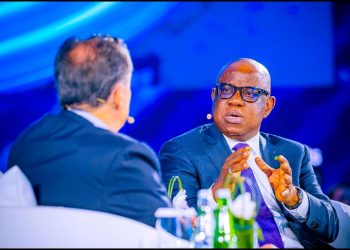
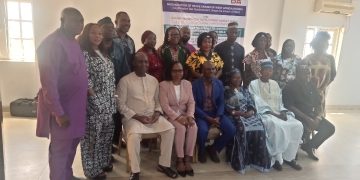
Mr Oyedele disclosed this during a public consultation workshop for analysts and journalists on the proposed changes to the National Tax policy held in Abuja.
He said withholding tax is the most difficult to comply with in Nigeria due to its complex nature.
He said, “We set out the objectives of what we want to do with withholding tax regulation. One of them is to simplify the tax. We want to reduce the burden on businesses, promote competitiveness, equity and ease of compliance and tax avoidance, detect tax evasion and reflect what is happening globally”
“We are creating an exemption for withholding tax for small businesses and what we have in mind is N50 million. We have reduced the rate for real businesses to as low as 2%- people producing goods and services because the margins are very small.”
“We have created an exemption for manufacturers- so if you are a manufacturer, don’t worry about withholding tax. If you provide input to manufacturers like farmers, don’t worry about withholding tax”
He explained that the proposed regulation had already been signed and would be made public in a matter of days.
Mr. Oyedele further said that for businesses not registered with the Corporate Affairs Commission (CAC), tax agents should deduct 200% of the normal tax rate for them for non-registration as a check to make companies and businesses register.
Meanwhile, the Committee has recommended the harmonization of taxes and levies collectable by the three tiers of government into eight categories.
Chairman of the committee, Mr. Oyedele, while speaking on the 8 categories said the proposed streamlining of taxes intends to make tax administration modern, simple, and adaptive, as well as make it become a growth enabler.
According to him, the proposed list of harmonised taxes and levies included income tax, property tax, Value Added Tax (VAT), customs duties, excise tax, stamp duties, special levy, and harmonised levy.
“The principles that we are working with is to do away with nuisance taxes with very low revenue yield, high cost of collection and ultimate burden on the poor and small businesses.
“We are focusing on high revenue yielding taxes that are broad-based and relatively easy to collect by merging taxes and levies that are imposed on the same or substantially similar tax base and keep the total number of taxes across all level of government to a single digit.”
He said the committee further recommended the institutionalisation of tax harmonisation reforms to ensure its sustainability.
Oyedele explained that the committee had consolidated the education and police taxes under special levy, adding that “we introduced the special levy with just one rate and we take out all those other taxes”.
He said the Harmonised Tax Levy (HTL), which comprised road and market taxes, was meant to cater for the local governments.
He said under the proposed new tax regime, income tax should now comprise Company Income Tax (CIT), Withholding Tax (WHT), CPT, and capital gain tax, among others.
He said, “We are hoping that when we are done there will be no consumption tax in any state.
“Even though the number of taxes we propose is eight, the federal government will feel like collecting five taxes; state governments will feel they are collecting seven taxes; local governments collecting six taxes.”
According to him, “All these will be done automatically and when we are done, there will not be need to be sharing FAAC on monthly bases.
“The tiers of government will get their accounts credited on daily basis.”
He stressed that the objective of the committee was to simplify the tax to reduce the burden on businesses, particularly SMEs.