





FG Adopts Disciplined, Scenario-Based Approach to Global Shocks
and Economic Reforms – Sanyade Okoli
Following the ripple effects of the Middle East conflict, the Federal Government says it was adopting disciplined, Scenario-Based Approach to Global Shocks and Economic Reforms.
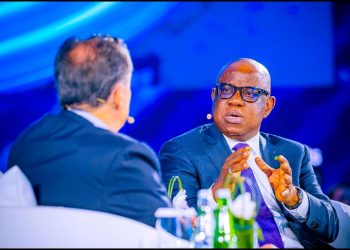
Special Adviser to the President on Finance and the Economy, Sanyade Okoli
stated this at J.P. Morgan West Africa Forum 2026 in Lagos, while outlining Nigeria’s reform resilience, subsidy stance, and fiscal
priorities.
The high-level regional forum offered Okoli the opportunity to draw out
government’s response to mounting global economic pressures—particularly the ripple effects of the Middle East conflict.
According to the Special Adviser, the development has become necessary as Nigeria is currently navigating inflationary pressures, energy market volatility, and ongoing structural reforms, including fuel subsidy removal and tax system overhaul.
“The government’s strategy is anchored on
disciplined fiscal management, targeted interventions, and long-term
economic resilience”, she said.
WHY EDITORS SHOULD LEAD WITH THIS STORY
• Timely global relevance: Links Nigeria’s economic outlook to geopolitical
shocks affecting oil, inflation, and trade.
• Policy clarity: Reinforces that fuel subsidy removal is irreversible,
addressing a major public concern.
• Investor signal: Positions Nigeria as disciplined, reform-oriented, and
stability-focused—critical for capital flows.
• Reform momentum: Highlights concrete progress on tax reform, revenue
mobilisation, and institutional strengthening.
• Balanced narrative: Offers both upside (oil revenue) and downside
(inflation, logistics costs), making for nuanced reporting.
KEY MESSAGES
• Scenario-based economic management: Government is treating global
shocks with caution—avoiding over-reliance on temporary oil price
gains.
• Fuel subsidy reform is firm: No reversal; focus is on targeted cushioning
measures rather than broad subsidies.
• Inflation mitigation priority: Efforts concentrated on transport costs,
social protection, and agriculture.
• Fiscal reform focus: Expanding the tax base, improving compliance, and
digitising revenue systems.
• Institutional progress: The National Tax Policy Implementation
Committee (NTPIC) and Nigeria Revenue Service (NRS) are advancing
compliance, transparency, and coordination.
• Long-term growth objective: Convert macroeconomic stability into
sustained investment inflows.
STRATEGIC FRAMING FOR MEDIA PLATFORMS
Business & Financial Media
• Focus on investor confidence, fiscal discipline, and reform credibility
• Headline angle: “Nigeria doubles down on reforms despite global
shocks”
General News / National Dailies
• Emphasise fuel subsidy stance and cost-of-living implications
• Headline angle: “FG rules out subsidy reversal, prioritises targeted relief”
Broadcast (TV & Radio)
• Lead with relatable impacts: fuel prices, transport costs, inflation
• Soundbite: “Reforms will not be reversed—support will be better
targeted”
Digital & Online Platforms
• Use explainer formats: “What global oil shocks mean for Nigeria”
• Highlight key quotes and quick facts for shareability
International Media
• Frame Nigeria as a case study in emerging market resilience
• Angle: disciplined policy response in a volatile global environment
EDITORIAL SUMMARY
Nigeria is reinforcing its commitment to economic reform and fiscal discipline
amid global uncertainty, with Sanyade Okoli emphasising a cautious, scenariobased approach to external shocks. While higher oil prices present potential
revenue gains, the government is prioritising stability over short-term windfalls.
The administration remains firm on fuel subsidy removal, shifting focus to
targeted support measures to ease inflationary pressures. Concurrently,
structural reforms—particularly in tax administration and revenue
mobilisation—are advancing through strengthened institutional frameworks.
The overarching strategy is clear: stabilise the macroeconomy, protect
vulnerable populations, and position Nigeria for sustained investment and
long-term growth.
Thank you all for your support and continuous cooperation.