



Nigeria’s Gas Reserves Far More Than a Commercial Opportunity- Ekpo.
…reiterates Transition Plan
Nigeria has 215 trillion cubic feet of proven natural gas reserves — the largest in Africa and among the top 10 globally and this represents “far more than a commercial opportunity, it is a historic responsibility.”
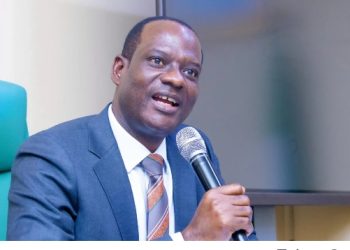
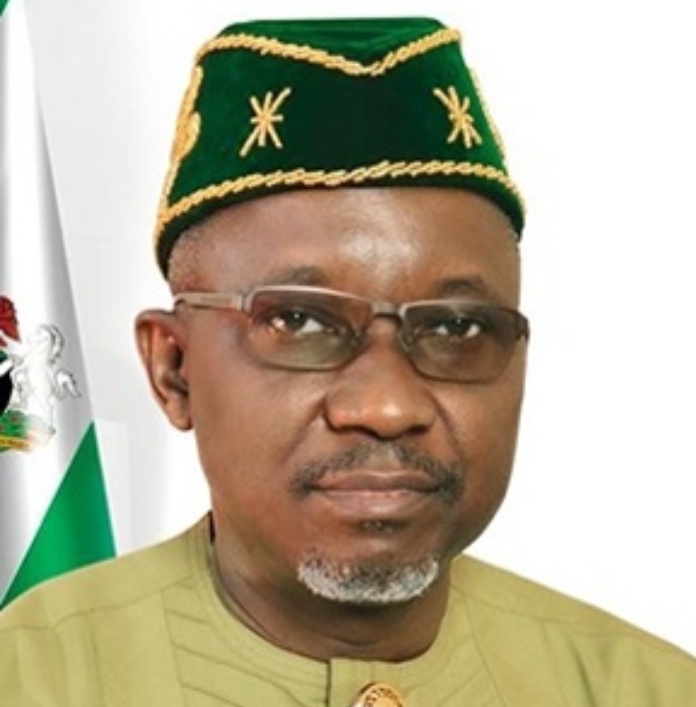
The Minister of State for Petroleum Resources (Gas), Rt. Hon. Ekperikpe Ekpo, made the declaration at the ongoing NOG Energy Week 2026 in Abuja, themed _“Advancing Energy Ambitions for Competitive & Resilient Economies.”.
Ekpo stated that Nigeria is repositioning natural gas as the central engine of its economic future, with the Federal Government declaring the country is moving “from a nation that simply possesses gas, to a nation that is entirely powered by gas.”
He posited that the nations that will shape the future of energy will not be those with the greatest resources, but those with “the clearest vision, the courage to reform, and the resolve to transform their resources into shared prosperity.”
He declared that the global energy system is undergoing unprecedented structural transformation driven by geopolitical uncertainties, rapid industrialization in emerging markets, and the explosive rise of Artificial Intelligence, hyperscale data centres and advanced manufacturing.
“These realities have reinforced a profound truth: The future belongs not to economies that choose between energy security and sustainability, but to those that successfully deliver both,” Ekpo said.
Describing natural gas as “the indispensable bridge” connecting both objectives, the Minister said it provides affordable baseload energy, fuels industrial growth, powers cleaner transportation, complements renewables, and strengthens macroeconomic resilience.
According to him, the turning point was the Petroleum Industry Act of 2021, which replaced ambiguity with transparent, commercially driven and investor-friendly frameworks that have significantly enhanced regulatory certainty.
He said building on the PIA, President Bola Ahmed Tinubu has signed landmark Executive Orders to streamline contracting timelines, introduce fiscal incentives for non-associated gas, eliminate bureaucratic bottlenecks, and restore viability to deepwater gas investments.
“As a result, we are seeing the return of huge Final Investment Decisions across the value chain,” Ekpo said, adding that Nigeria’s message to investors is clear: “Nigeria is open for business, and we have established a stable, competitive, and highly predictable investment environment.”
Nigeria’s leadership profile has also risen globally. The country has assumed the Presidency of the 2026 Gas Exporting Countries Forum Ministerial Meeting, while Dr. Philip Mshelbila was elected GECF Secretary-General.
On July 2, 2026, the International Energy Agency also admitted Nigeria as its newest association country — the first OPEC member to do so and the sixth African association member.
Ekpo said that since assuming office in August 2023, his mandate has been to transform natural gas from an export commodity into “the primary engine of Nigeria’s economic growth.” Every ministry initiative, he added, is guided by one question: “How does this improve the competitiveness and resilience of the Nigerian economy?”
He explained that the answer is the Decade of Gas initiative, which is aggressively directing gas to domestic industries, fertilizer and petrochemical plants, commercial transportation, and clean cooking solutions for millions of households.
“Every cubic feet of gas utilized domestically translates directly to new local jobs, reinforced industrial output, reduced import dependency, and a higher standard of living,” he said.
To unlock this, Nigeria is executing massive infrastructure projects. The AKK and OB3 Gas Pipelines are integrating the national grid, moving gas from the resource-rich South to industrial hubs in the North and West.
Alongside pipelines, new private and public gas processing plants are scaling up lean gas availability, systematically ending routine gas flaring, and unlocking LPG and condensates for local industries.
Internationally, Nigeria is targeting leadership in LNG. With current capacity at 22 million tonnes per annum, the ongoing NLNG Train 7 Project will add 8 MTPA, bringing total capacity to 30 MTPA and cementing Nigeria’s role as “a guarantor of global energy security.”
To ensure citizens feel the benefits directly, two major domestic programmes have been launched under President Tinubu. The National Clean Cooking Programme aims to transition 5 million households to LPG by 2030, cutting emissions, protecting forests, and creating jobs.
He noted that the Presidential Compressed Natural Gas Initiative is also reshaping transport by rolling out CNG conversion kits and refueling stations nationwide. CNG, Ekpo said, can reduce transportation costs by up to 50% and create a new sustainable domestic market for gas.
Regionally, Nigeria is leading cross-border integration through the Trans-Saharan Gas Pipeline to North Africa and Europe, the Africa-Atlantic Gas Pipeline to serve over a dozen West African nations, and the Nigeria-Equatorial Guinea Gas Pipeline to commercialize stranded gas in the Gulf of Guinea.
Ekpo wrapped up saying that Nigeria’s gas story has entered a new chapter “no longer defined by stagnation, but by reform, execution, and deep partnership.”