





The Hijab Controversy: Issues and reality
By Comfort Yakubu
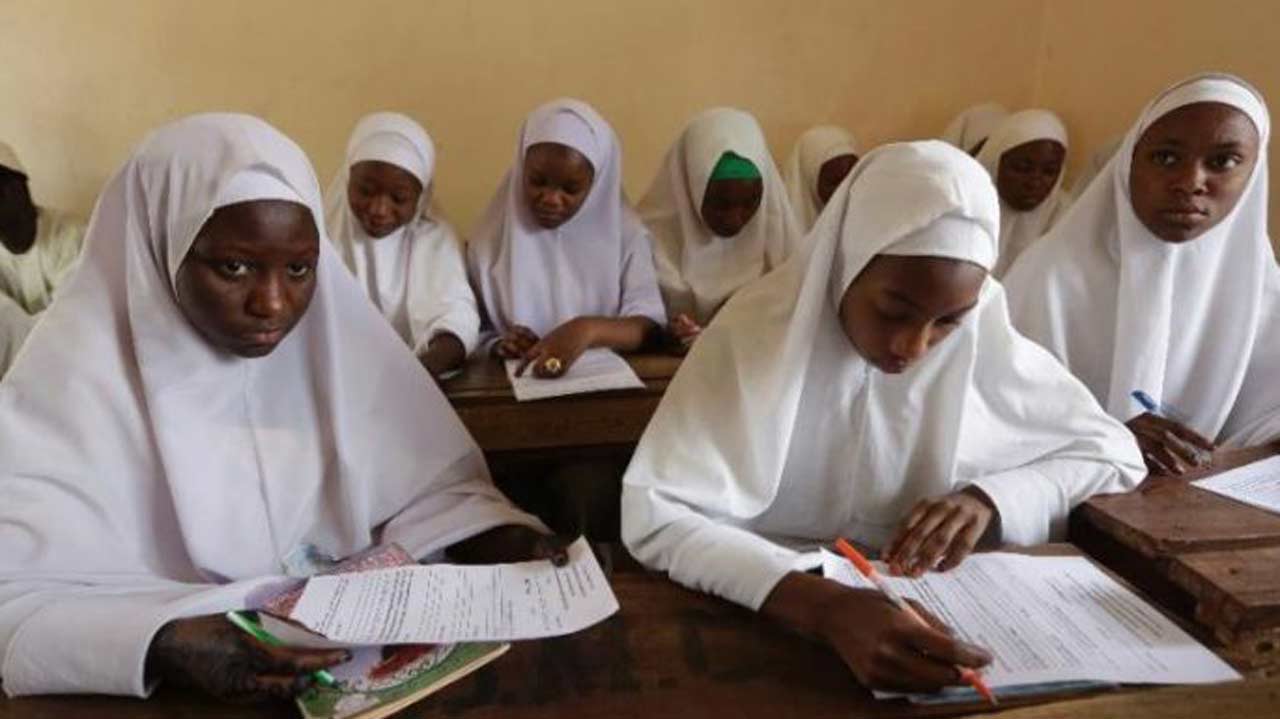
On the 17th june 2022, the supreme court judgment gave approval for female Muslim students to wear hijab to schools in Lagos State. Various reactions trailed this Judgment, while some applauded, others took it in bad faith.
The Muslim Students Society of Nigeria, MSSN, Lagos chapter, Hijab Rights Advocacy Initiative,Muslim rights advocacy group, the Muslim Rights Concern (MURIC), are among the organisations that applauded the judgement of the Supreme Court.
According to the Court of Appeal , the hijab ban violated the students’ rights to freedom of thought, conscience, religion, the dignity of human persons and freedom from discrimination guaranteed by the Nigerian constitution.
The judgment of the court held that wearing the hijab was an Islamic injunction and an act of worship required of Muslims.
The case involved the Lagos State Government as the appellant and Asiyat AbdulKareem (through her father), Moriam Oyeniyi, and the Muslim Students’ Society of Nigeria as the respondents.
A senior Lawyer Malcom Omoirhobo, reacting to the judgment, went to court appearing in the full traditional attire of an “Olokun priest” , saying as a traditionalist, and a strong adherent to “Olokun” the god of rivers, he is free to now to wear his mode of worship to public places.
Another lawyer, Ogbachalu Goshen, also reacted by appearing at the Okpoko Magistrate Court in the Ogbaru Local Government Area, near Onitsha, Anambra State, dressed like a christian clergy , the proceedings were disrupted as the magistrate, CB Mbaegbu, objected to his dressing, adding that he could not appear in such regalia as a defence counsel.
Goshen, in return, disagreed with the magistrate, citing the recent Supreme Court judgement that gave female students the backing to wear hijab in public schools as a precedent.
Maryam Umar Tifin is an architect and lectures in the Department of Architectural Technology, Federal Polytechnic Bida, Niger State. She says a Muslim woman is supposed to wear Hijab to cover her body in the presence of Men who are not related to her. This is to obey the commandment of Allah, where He instructed prophet Muhammad in the glorious Qur’an in Surah An-Noor, Verse 31:
According to Hauwa Mahadi’s thesis on Hijab in Nigeria, and the woman’s body and the feminist private/public discourse,she explains that ”the diversity of Nigeria means that there is a variety of traditional veiling types before the hijab. Each veil type has its own history rooted in the cultural exchanges and/or technological capacity and classes of women in each community. A silent revolution in Muslim women’s veils has been taking place in Nigeria especially from the mid 1970s”.
”The hijab might indicate women’s persistence of pursuing their right to be in the public space the process reflects both a renegotiation of women’s role in politics, especially in the state public sector, and their status in it.
In the 1970s, women had begun to enter the public sector in larger numbers, competing for positions.
One of the explanations for the hijab, she says has to be, among other reasons, a means for Muslim women to participate in the urban work place without men reducing their contribution to their sexuality. It could also mean the hijab is a male demand on women, a compromise women were prepared to make, to enable them access the urban spaces previously dominated by men.
The hijab has a long history, this type of head covering has been in existence before Islam came into being and are also worn by women from a variety of religious traditions. To this day, head coverings play a significant role in many religions, including Orthodox Judaism ,Catholicism among ohers.
According to Barrister Tolulope Adekola Anthony’s analysis, on the use of hijab In public educational Institutions In Nigeria,he explains that ” Nigeria is nearly equally divided between Christianity and Islam, though the exact ratio is uncertain. While the majority of Nigerian Muslims are concentrated in the northern region of the country, Christians dominate in the south. Over the years, students of public institutions in the south have had to adhere strictly to the prescribed school uniforms by the state governments. The prescribed school uniform often prohibits the use of hijab or other head coverings. In recent times, Muslim students in the southern part of Nigeria are increasingly accepting the traditional teachings of Islam on dressing. The most visible expression of this “revivalism” is perhaps the adoption of the hijab by many female Muslim students”. He explains further that in some institutions, the authorities have attempted to subvert the hijab by introducing dress codes for their students. While some institutions prohibit only the niqab, others prohibit other versions of the hijab, even the khimar. The dress codes and the hijab prohibition have caused a monumental divide along political and religious lines in Nigerian educational institutions and the wider society”.
He explains further that ” there appears to be a general consensus in Islam that Muslim women and men must dress modestly and not expose their bodies unduly,and the need for women not to expose their body remains a cardinal requirement for women in Islam. However, wearing hijab in secular settings has generated controversies globally”.
He suggests that the government should establish an inter-religious regulatory body charged with the responsibility of educating religious leaders on the core values of religious tolerance and the need for peaceful coexistence among diverse religions he also reiterated the need for religious preachers to emphasis the nexus between physical acts of worship and moral values of peace, honesty, brotherhood, and love. God’s love, fear of God and respect for the dignity of the human person should be the focal point of preacher’s messages to their followers
Comfort Yakubu is a Public Affairs Analyst and writes from Abuja.