





Scorecarding Cardoso’s Monetary Policies
By Ademola Bakare
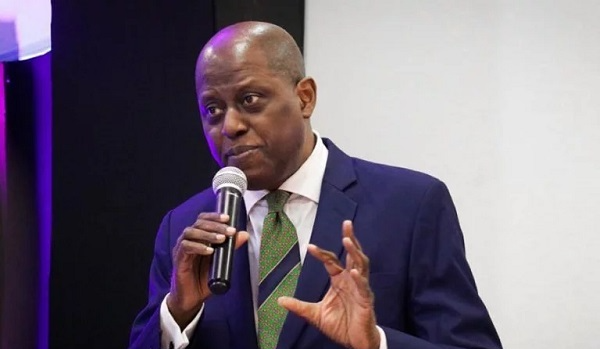
A year ago, President Bola Tinubu appointed Olayemi Cardoso as the Governor, Central Bank of Nigeria {CBN}. His appointment was not happenstance, but strategic to refocus the affairs of the Bank, and the financial sector.
His entrance as a regulator marked a turning point in Nigeria’s economic landscape. At the time, the economy faced a significant economic woe – intractable inflation, and exchange rate volatility.
The financial sector was not spared either. Thus, on assumption of office, Cardoso explained his mission, which he clearly spelt in his maiden speech.
In the speech, he outlined daring initiatives aimed at stabilizing, promoting, and laying a sound foundation for the envisioned $1 trillion GDP economy within 7 years. This economic reform blueprint entails increasing banks’ capital base, and adopting an explicit inflation targeting framework.
He has remained on course. His experience, and oiled-track record positioned him to navigate Nigeria’s economic headwinds.
Olayemi brings a wealth of experience, and discipline to the job.
An experienced stock-broker, consultant, and economic planner, well-horned to reposition, and restore the credibility of the Bank, and restructure the financial system.
Poised to ensure a robust regulatory framework to support economic growth and stability, he focused on positioning the Nigerian economy as the Africa’s financial hub.
In achieving this objective, Cardoso mandated the banks in the country to increase their capital base to meet the demands of a larger economy on or before March 2026.
If we must recall, he assumed office at a critical time of economic uncertainties, embattled by the deluge of economic headwinds – the spiking inflationary pressures and foreign exchange volatility, compounded by huge debt inherited from past administrations. Steeled Olayemi stoically confronted them.
Therefore, as he marks a year in office, a cursory assessment of his policies shows how impactful they have been, reconfiguring the financial ecosystem. He signalled interest normalization, increased banks’ capital base, and adopted an explicit inflation-targeting initiative to promote the effectiveness of monetary policy. Cardoso’s action was to ensure a robust regulatory framework, capable of supporting economic growth and stability, as well as positioning the Nigerian economy as a leading financial hub in Africa.
To achieve this objective, he encouraged equity issuance, merger, or license adjustments.
Klieg-lighting his leadership in the last one year revealed a stoic determination to make impact. The regulatory review of Bureau de Change (BDC) operations is another initiative aimed at promoting transparency in the foreign exchange (FX) market.
The new licensing requirements and capital standards imposed on BDCs are designed to enhance oversight and distribution of foreign currency, ultimately reducing market distortions and ensuring a more stable FX market.
Before the policy however, BDCs were alleged to have been complicit in market distortions, and became channels for money laundering, engaging in illicit financial transactions. They were alleged as havens for terrorism financing.
Binance case was a classic example. Cardoso had disclosed that $26 billion flowed through Binance Nigeria in one year from sources and users CBN cannot identify.
Though, Cardoso’s prioritized a-$1 trillion GDP economy, focusing on sustainable, and inclusive growth. It may however turn a mirage without a strong, and coordinated regulatory bodies.
The realization birthed Financial Services Regulation Coordinating Committee Strengthening {FSRCS} to foster inter-agency meetings, and collaborations on issues such as cryptocurrency frameworks, and infrastructure financing.
And to achieve this objective also, his leadership at the Bank adopted inflation-targeting framework to enhance monetary policy effectiveness, while also recognizing the critical role of technology in providing financial services to boost financial inclusion.
Furthermore, his quest without a comprehensive review of the critical pillar of the financial ecosystem – consumer protection would have been incomplete. He ordered a comprehensive overhaul of the consumer protection.
A revised regulations was issued in February 2024 to improve standards, and address emerging Fintech risks, poised to enhance customer service standards, and increased engagement with formal financial institutions.
In furtherance of this objective, a pilot consumer protection risk-based examination was conducted to identify policy gaps, and improve conduct among financial institutions. This complements traditional compliance checks by identifying urgent risks that could affect financial consumer protection.
Added to this provision by the Cardoso-led CBN is the enforcement of sanctions to ensure compliance, deter unethical behaviour, and enhance transparency in the financial ecosystem.
He also recognized the essential role of capacity building in refocusing the CBN on its core mandate.
Urging adherence to governance, Cardoso acknowledged that the Bank strayed, and lost focus of its core mandate, delving and engaging in quasi-fiscal activities. He addressed this challenge by streamlining its operations to improve efficiency, and align with Bank’s revised strategic objectives.
Broadly speaking, the CBN governor’s scorecard is largely impressive, considering the timeframe. However, he, and his team, should not rest on their oars, there is more work to be done. Especially, the Naira exchange rate debacle.
The exchange rate fiasco is a major concern to Nigerians. Nigerians expect a stronger Naira. Thus, in the years to come, the CBN should continue building on these achievements deepening financial inclusion, cybersecurity, and positioning the economy for a bigger $1 trillion economy. Then, the aspiration of a $1 trillion GDP would have been achieved, making Nigeria, indeed, the financial hub in Africa.
Ademola Bakare writes from Abuja