

AfriTAL, ECOSGF Upbeat on Advocacy for Methane Emission Reduction in Nigeria
Activities of two forward-looking civil society organisations, the African Initiative for Transparency, Accountability, and Responsible Leadership (AfriTAL), and Environmental Centre for Oil Spills and Gas Flaring (ECOSGF) have been upbeat, joining current efforts by Nigeria in abating methane Emission Reduction.
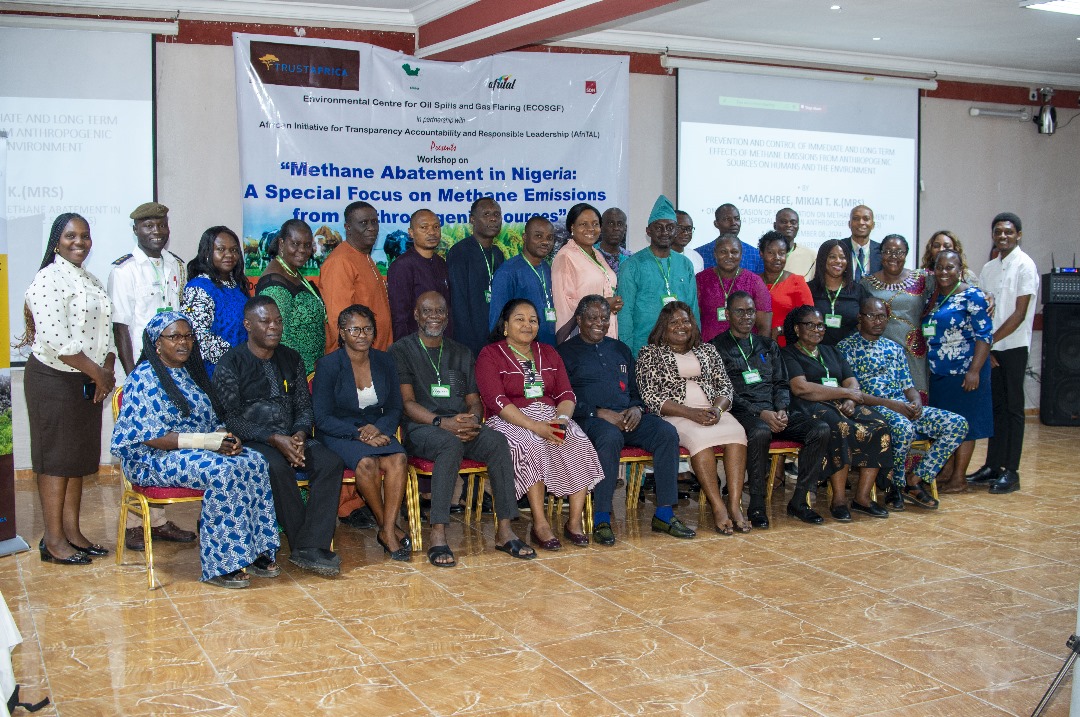
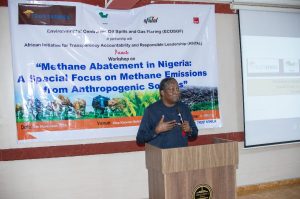
At the just concluded workshop on “Methane abatement in Nigeria: Special Focus on Anthropogenic Sources” funded by TRUSTAFRICA held in Port Harcourt, the Rivers State Capital, Executive Director,
AfriTAL, Dr Louis Brown Ogbeifun in his welcome address called on
government and corporate organizations to do what is necessary to reduce methane emissions.
He noted that the citizens owe a duty to “begin to do their little bits to support the more extensive methane abatement processes by cultivating the habits of recycling our wastes, cultivating attitudinal and behavioral changes, and advocating for regulatory and consequence management measures by the government”.
Proffering a more enduring solutions to methane emission reduction, Dr Ogbeifun said livestock farmers should be encouraged to adopt better feeding alternatives with less methane-intensive diets for cattle and adopt technology like aerobic digesters for manure management to turn their waste into wealth.
According to him, of all the significant sources of emissions into the atmosphere, agriculture and improper waste management directly or indirectly relate to human daily activities and wastes.
He stressed that these activities and wastes contribute immensely to the anthropogenic sources of methane, which has been labeled a potent greenhouse gas (GHG) contributing to global warming, Methane emissions degrade the environment and contribute to human health hazards if not contained.
He posited that uncontained methane in the atmosphere accelerates global warming and worsens air quality by forming ground-level ozone adding that the formation of ground-level ozone could occur through complex chemical and photochemical reactions involving other pollutants, such as nitrogen oxides (NOx) and volatile organic compounds (VOCs).
“These chemical reactions are accelerated by high-intensity sunlight penetration downward. As NOx descends and disperses through the lower atmosphere, it can meet and react with methane and other hydrocarbons at ground level, contributing to the formation of ground-level ozone. Although atmospheric methane has a shorter lifespan than carbon dioxide (CO2), it has an intense warming effect on the climate, making it critical for climate change actors to advocate and implement mitigation strategies to reduce methane emissions to the atmosphere”, he said.
He emphasized that despite the hazardous nature and impact of uncontained methane emissions into the atmosphere, little attention has been given to methane emission reduction strategy, just as many organizations and climate change advocates have concentrated on methane emissions from fossil fuel and coal sources for many years.
He said ECOSGF and AfriTAL decided to partner in advocating for a reduction of anthropogenic sources of methane in the atmosphere,
realizing that human beings will continue to inhabit the planet, increase in population, and eat and deliver waste products to the environment.
“Our improper sanitation and poor waste management behaviors lead to methane emissions into the atmosphere”, he stressed.
He urged workshop participants that the message of turning waste into wealth will involve the collective efforts of governments, corporate organizations, and citizens, adding that Policymakers should implement policies that incentivize methane reduction while sanctioning destructive environmental behaviors.
While noting that we may not have control over what the government, policymakers, and corporate organizations will or will not do to support methane reduction strategies, he urged Nigerians to have control over how to re-engineer their minds and must begin doing things better.
According to him, “We should advocate methane reduction strategies in homes, schools, churches, mosques, and begin to dispose of our waste properly, create gardens, plant trees, properly manage dumpsites and landfills, and ensure the utmost cleanability of our immediate environment, stressing that these efforts in our little corners will translate into a tremendous collective effort toward achieving efficient and effective waste management systems.