




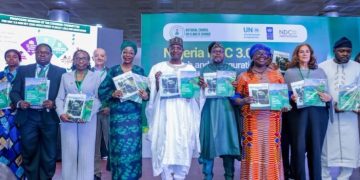


Agricultural Sample Census Listing Essential for growth and National Development- NBS boss
The National Bureau of Statistics(NBS) has said that the absence of comprehensive data on Nigeria’s agricultural sector has been a significant barrier to progress.
The Statistician General of the Federation, Prince Adeyemi Adeniran, stated this in an address at the formal launch of the National Agricultural Sample Census (NASC) Listing Results, Monday in Abuja.
According to him, the gap has limited the ability of policymakers, investors, and stakeholders to make more informed decisions that are critical to the sector’s growth, and overall food security in Nigeria.
He however enumerated the gains derivable from the National Agricultural Sample Census (NASC) Listing Results, which it conducted in 2022, the first of its kind in nation’s history after two and half decades.
“With over 65 percent of the population directly or indirectly dependent on the agriculture sector for their daily sustenance, the NASC results offer invaluable insights into the very foundation of our agricultural sector, providing a detailed picture of: The size and structure of farm, holdings; Land use patterns and crop production practices; Livestock population and fisheries activities; and The use of agricultural inputs and technologies.”
He noted that the launch of the NASC results was timely given the current global and national focus on food security, as well as the government’s drive towards enhancing sustainable local production to cater for the nation’s youthful and growing population.
“The data gleaned from this census is more critical than ever. Viewing it from a statistical standpoint, the results provide major inputs into the ongoing rebasing of National Accounts, or the Gross Domestic Product (GDP), as we generally know it.
“It will further empower us to develop evidence-based solutions for pressing challenges. By understanding the current state of agriculture, we can design targeted policies and programs to address issues related to food security, promote sustainable agricultural practices, and enhance overall productivity.
“It will also assist in attracting much-needed private sector investment into the agricultural landscape. The data will equip investors with the confidence and knowledge required to make informed decisions regarding agricultural ventures in Nigeria.
“Furthermore, the results will serve as a vital benchmark for tracking progress toward achieving national and international agricultural development goals, including those outlined in the UN’s Sustainable Development Goals (SDGs)” , Prince Adeniran asserted.
He said the development was was achieved through the collaborative efforts of the NBS, the World Bank under the Fiscal Governance and Institutions Project (FGIP), the Food and Agriculture Organization of the United Nations (FAO), and the unwavering support of the Federal Ministry of Agriculture and Food Security.