

Nigeria’s economy to bounce back in 15 Years–World Bank
The World Bank has delivered a sobering assessment of Nigeria’s economy, projecting that it will take about 10 to 15 years for the nation to undergo remarkable transformation.
The revelation exposes the pressing challenges ahead and calls for urgent, decisive action to steer the economy toward recovery and resilience.
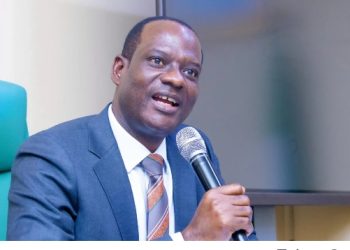
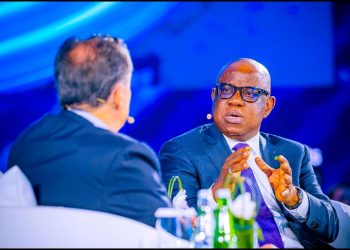
Senior Vice President, World Bank Group, Indermit Gill, who spoke at the 30th Nigerian Economic Summit Group (NESG #30), emphasised that the government must do everything in its power to protect the most vulnerable citizens from hardship, as their lives and the lives of Nigeria’s 110 million children depend on it.
He said: “Nigeria will need to stay the course for at least another 10 to 15 years to transform its economy. So, I don’t know if you’re agreeing with me or if you’re disagreeing with me. If it does that, it will transform its economy, and it will become an engine of growth in sub-Saharan Africa, helping to transform the region. It’s very difficult to do these things, but the rewards are massive. “This is the lesson from the last 40 years, as well as the experience of countries such as India, Poland, Korea, and Norway. So again, I’m going to say something unpopular, perhaps. But Nigeria’s reforms from 2003 to 2007 were exactly what was needed.
“But they were not sustained. Today’s fiscal, monetary, and exchange rate reforms are hurting everyone, especially ordinary Nigerians, who are struggling with the high prices of food and transport. “The government must do everything in its power to protect the most vulnerable citizens from hardship because their lives and the lives of Nigeria’s 110 million children depend on it. It must also stay the course of reform, as Nigeria’s long-term future and the future of these 110 million children depend on it. Now, during the coming year—and I’m almost at the end—Nigerian policymakers have to do three things.
“The first is to prioritize non-oil growth. This requires a competitive exchange rate, which Nigeria now has. Nigeria’s real exchange rate is at its most competitive in at least 20 years,” he said.
“This is a great opportunity for the private sector. To protect the poor and maintain competitiveness, the central bank must stay focused on inflation. It should resist the lure of short-term capital inflows that might push up the Naira’s value too quickly and curb non-oil growth.
“It should rebuild foreign exchange reserves instead as a cushion against oil price volatility. Again, I think Governor Cardoso (Governor of the Central Bank of Nigeria) is doing many of these things, and he should be encouraged. The second thing is to help every vulnerable household cope with high inflation,” he said, adding that the government is rolling out a large-scale targeted temporary cash transfer programme that has already reached between 4 and 5 million households. It should quickly extend this to 10 million households and perhaps more if necessary. The World Bank also noted that the government should protect vulnerable citizens using savings from the fuel subsidy removal. Over the next few years, Gill explained, the government should also install a cost-effective safety net to protect its most vulnerable citizens, financing it with some of the savings from fuel subsidy removal and exchange rate adjustments.
“It has to make the economy more business-ready. And I think the Chairman of NESG has put out a very clear agenda of what needs to be done in this regard. “In the next 10 years, more than 12 million young Nigerians—both men and women—will enter the workforce. Generating jobs for them will greatly depend on the private sector and large-scale domestic and foreign private investment in the non-oil sector.
“Attracting such investment means boosting the national power grid, improving transportation, enhancing security, and strengthening the rules and regulations governing private enterprise. Failure in these areas would set back reform efforts across the continent, in addition to ruining the future of yet another generation.
“Nigeria’s elites—we are all elites here in this room—must unite to support these reforms. By enabling a broadly prosperous and stable Nigeria, they will be making perhaps the most valuable and the biggest request for their own children and grandchildren. “Now, the World Bank team in Nigeria is one of the best. You have here an excellent country director. “You have a top-notch team of economists, energy specialists, and operations staff. They have the expertise that is needed. Most importantly, though, especially in difficult times, they have the experience that the moment demands. Many of these experts you have here in the Abuja office are veterans of similar reforms in places like Indonesia and many other places. You should take full advantage of that.
“But the one thing that struck me about our team here, as I prepared for this visit, the most important thing that I learned about them is that they have great affection and admiration for everyday Nigerians. The Nigerian government and the people can count on their support 24/7, and this team will get all the support they ask for from the entire World Bank group,” he noted.-The Sun